It is of course widely recognized that those rural communities which are united are likely to achieve more progress. However, the next question is – unity achieved on what basis? In conditions in which there are socio-economic inequalities and identity-based discrimination and injustice, mere calls for unity will not result in the kind of enthusiastic cooperation that can result in true progress. What is required is that the call for unity should be based on ending all kinds of identity-base d discrimination and injustice so that the true cooperation of people can be realised for inclusive progress.
It is this kind of inclusive progress and improved social relationships based on non-discrimination and equality that Seva Mandir, a leading voluntary organization of South Rajasthan which reaches out to nearly a million people, has been striving to achieve for nearly five decades of its purposeful existence. The mission statement of Seva Mandir seeks “to construct the conditions in which citizens of plural backgrounds and perspectives can come together to benefit and empower the least advantaged in society.” There is emphasis on improving social relationships at various levels culminating in creation of non-discriminatory, equality-based community institutions taking forward various justice-based causes and ensuring improvement of the natural resource base in ways that can benefit everyone including weaker sections.
Advertisement
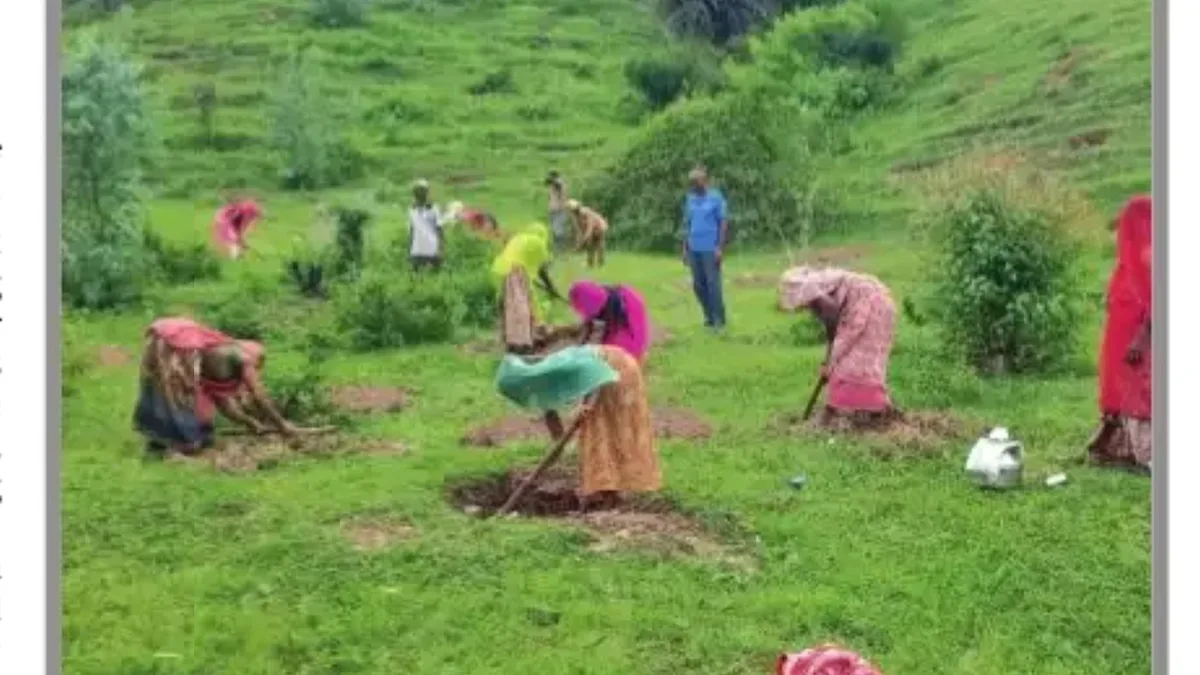
Hence over 1,000 community institutions have been created in the nearly 1,500 villages where Seva Mandir has been working. The result is that the impact of its work can last much beyond the duration of any project-based intervention. This is particularly so in the context of the highly appreciated work of Seva Mandir relating to greening and regeneration of common land including degraded pastures. In 2023, this work was honoured with the prestigious Elinor Ostrom Award. The sustained gains of this work are even more where watershed development projects have also been taken up as in Ramaj village of Udaipur district. Although decades have passed, people still benefit from this work, as this writer learnt during a recent visit.
Some of the results achieved are more heartwarming in the context of Delwara, a peri-urban or fast urbanizing village which is located closer to Udaipur city. This villages includes 18 hamlets, each of which is largely inhabited by people of a community. Seva Mandir has tried to harness the unity of these communities for ensuring inclusive and broad-based development of the village. People who were initially reluctant to sit on the same carpet for meetings are now happily working in close cooperation with each other to take forward development initiatives in areas as diverse as waste management and heritage protection, promotion of handicrafts and saving of traditional water sources.
Today thanks to the efforts of a sister venture of Seva Mandir called Sadhna, the women of this village are supplying craft work to leading brands of the country. But when this journey started, there was reluctance on the part of most men to allow the women of their family to take up training for this work. As Prema Devi, who played a leading role in taking forward this work despite all the difficulties, says, she used to go to several homes to convince families regarding the usefulness of the training while at the same time mobilizing a group of women to help her in tackling cases of domestic violence and alcoholism. Despite all the difficulties of those days, the efforts were never given up and were accompanied by wider initiatives to end gender-based discrimination and injustice. The combined effect of this is evident not only in the big success of craft-based livelihoods but also in the enthusiastic participation of women in development initiatives.
In Jamun village of Jhadol block (Udaipur district) a similar persistence in the face of initial heavy odds has finally paid off as community forest rights long sought by this village have been recognized. The villagers helped by Seva Mandir have not lost any time in following this up with an impressive afforestation effort in which nearly 6,500 trees have been planted. As villagers and community workers explained during my recent visit here, they had been trying for this recognition for several years. Their persistence and preparatory work of years paid off when some time in 2023, the state government launched a campaign for this and as the community here was well-prepared their claim was quickly accepted.
I met a leading community coordinator of Seva Mandir here named Bhanvar Chauhan who in a recent accident had suffered 32 fractures and had to undergo 7 surgeries. Despite this, within a few months he was back on his feet, leading several ongoing efforts and also planning for the future. It is such determination and willingness to keep trying in adverse conditions that has contributed to several success stories of Seva Mandir and the communities with which this voluntary organization works. Despite these successes and their increasing recognition, Seva Mandir continues to say that there must be a willingness to learn from experience and mistakes must also be recognized in a spirit of learning, contributing to even better achievements in future.
(The writer is Honorary Convener, Campaign to Save Earth Now. His recent books include Planet in Peril, Man over Machine and A Day in 2071.)